
Flower Mound Garage Door Guide
Why a Garage Door Goes Off Track
A look at why garage doors jump track in Flower Mound's 2000s-era housing stock, how moderate heat cycling wears hardware, and when to stop forcing it.
- Licensed & Insured
- Same-Area Service Calls
- Upfront Pricing
When It Stops Being a DIY Job
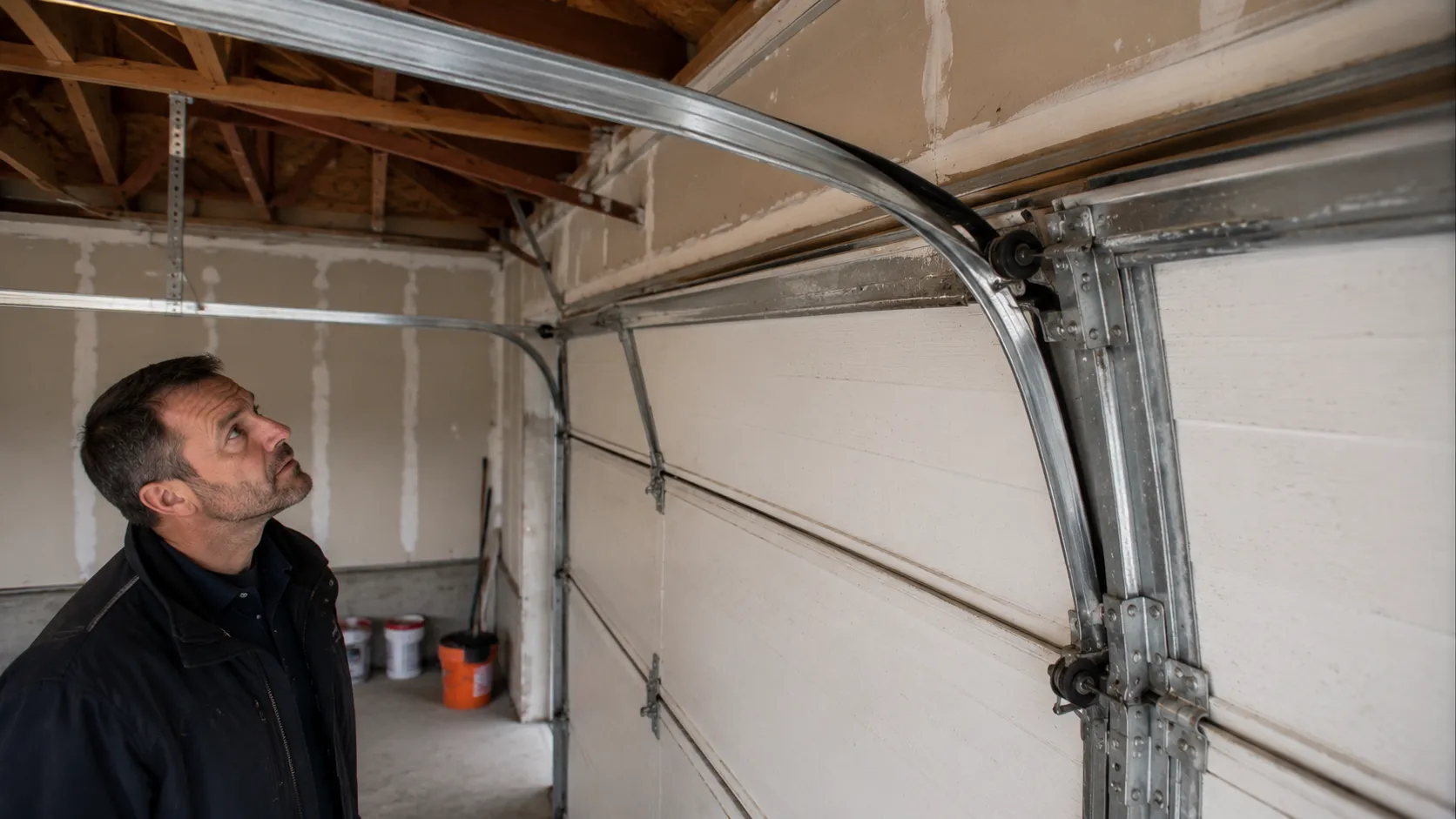
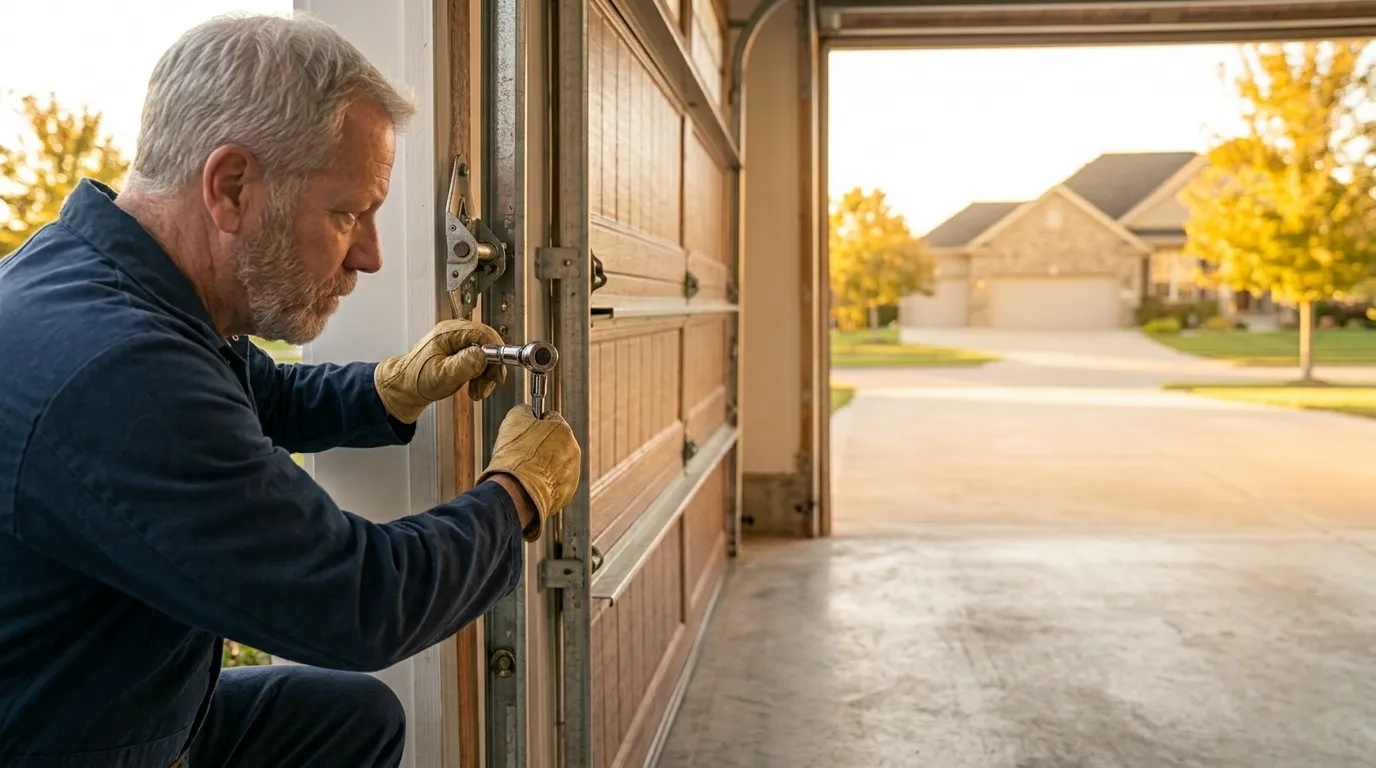
If the door is hanging at an angle, if one side is higher than the other, or if you can see daylight between the roller and the track, stop opening and closing it. Every cycle after that bends the track further and can pull the bracket clean off the jamb. This is also the point where a lot of owners reach for a rubber mallet and a ladder, which is fine for a roller that's barely nudged out of the channel and nothing else.
With 63,631 owner-occupied houses in this service area, the track and roller failure pattern shows up the same way over and over: a door that's run fine for fifteen or twenty years on its original hardware starts binding, then jumps. That's not a DIY afternoon.
Realigning a track by eye, without pulling the door and checking the vertical plumb against the framing, usually just moves the bend somewhere else. If the door won't sit flush in the opening after you've backed off the mallet, call it and get someone to look at the bracket and the jamb, not just the track.
What Is Going On
A door goes off track for one of three reasons: the track itself has bent, the roller has worn down enough that it won't ride the channel straight, or the mounting bracket holding the track to the framing has loosened. In a lot of Flower Mound garages, it's the bracket. Housing in this pocket of town went up between 1959 and 2014, with the bulk of it clustered around 2000, which means a large share of doors are running original tracks and roller hardware that's now twenty-plus years old.
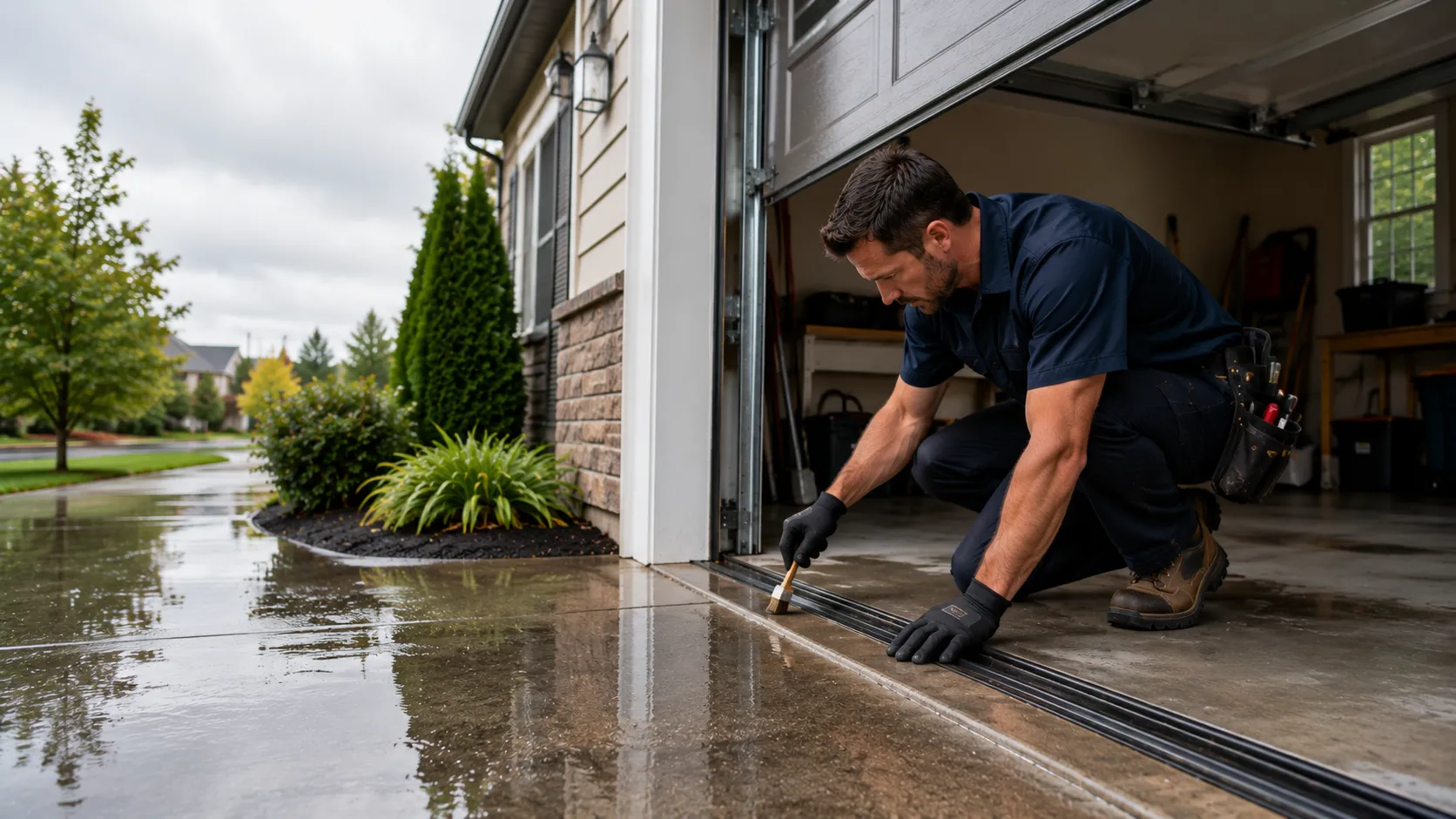
Steel track doesn't fail all at once. It fails a quarter-inch at a time, every time the garage heats up and cools down, every time the door gets slammed shut on a rainy day.
Two decades of that kind of cycling is enough to walk a lag screw out of a stud even if nothing ever hit the door. Once one bracket is loose, the track flexes under the door's weight instead of holding its line, and that flex is what eventually lets a roller pop free.
What Local Conditions Do
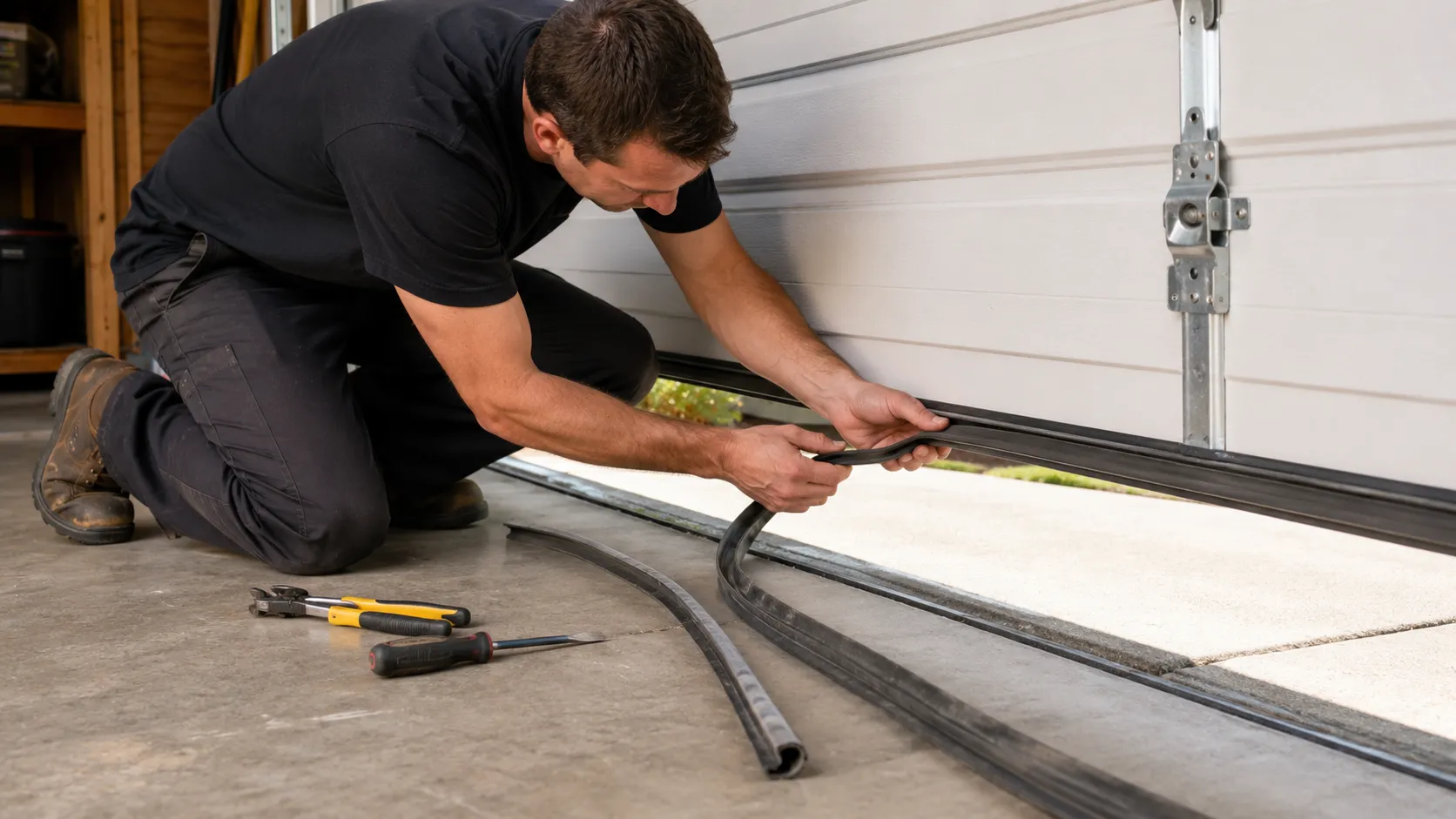
This area sits in a moderate heat climate band, not the kind of extreme swing that cracks a concrete slab or heaves a foundation. That matters here because it rules out one common cause of chronic track misalignment. What moderate heat does instead is slower and less dramatic: steel expands and contracts a small amount every day, all year, and over two decades that adds up to loosened fasteners and slightly widened bolt holes in the framing, even without a single hard freeze or a heat event severe enough to warp the panel itself.
Given that most of the 27 named areas in this part of town were built out during that same 2000s construction wave, a lot of garages are hitting that twenty-year mark on original hardware around the same time. It's less a sudden failure and more a slow drift that finally shows up as a jumped roller.
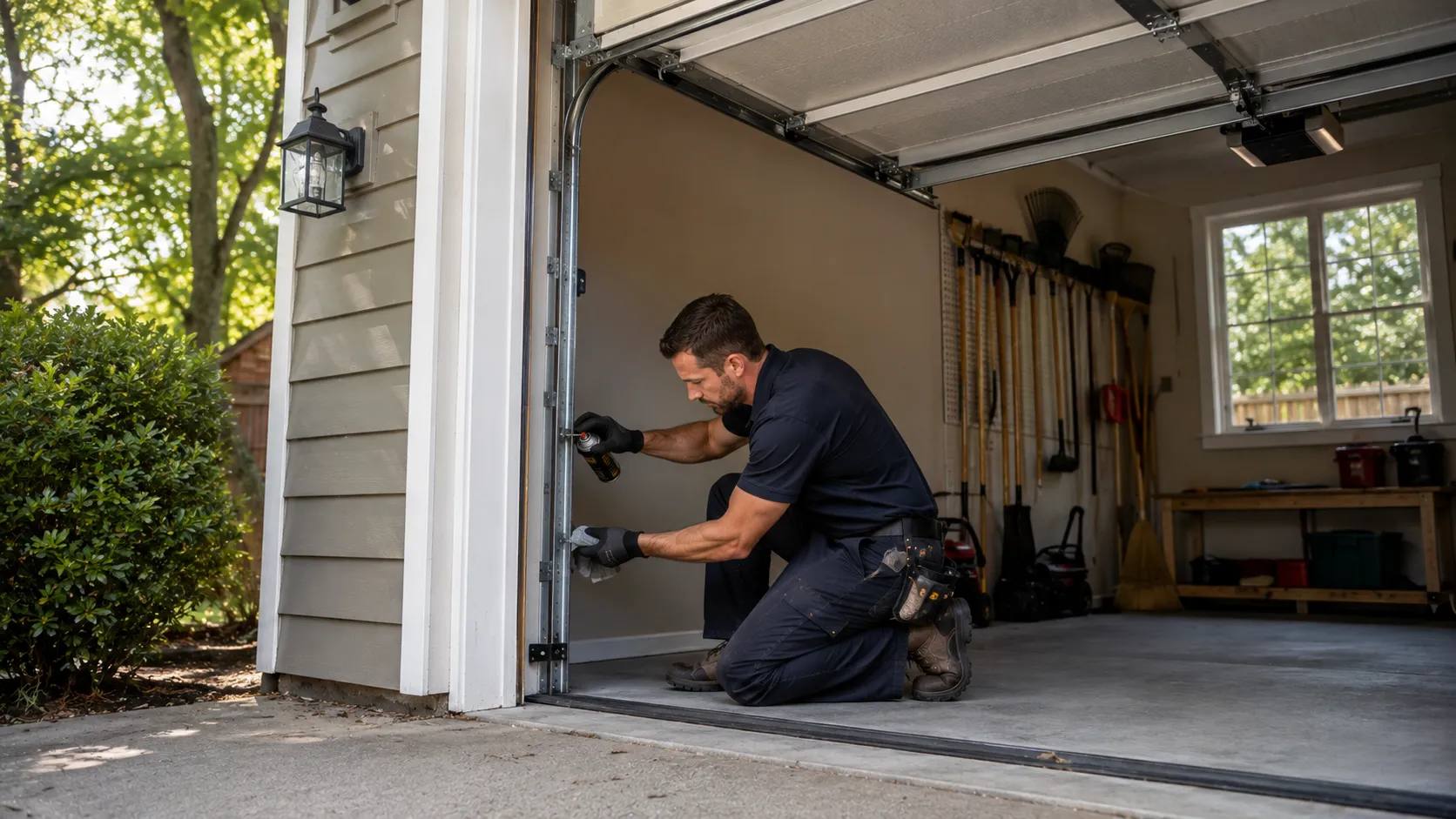
Where People Go Wrong
The most common mistake is treating a track problem as a spring problem, or the reverse. If the door is off track, tightening the spring tension does nothing and can make the door more dangerous to work on.
The second mistake is re-bending a track back into shape and calling it fixed. A track that's bent once has a weak point in the steel, and it will bend again at that same spot, usually sooner than the first time.
Here's the honest limitation: once a track section is visibly bent rather than just knocked loose, we replace that section instead of straightening it. Bent steel doesn't go back to true, and a straightened track under a door that weighs a couple hundred pounds is a bracket failure waiting to happen.
At a median household income of $118,949, most owners here can afford to do the section right instead of patching around a bend, and that's the call we make. If you're outside this immediate area and want to check whether we cover your street, see /.
How We Can Help
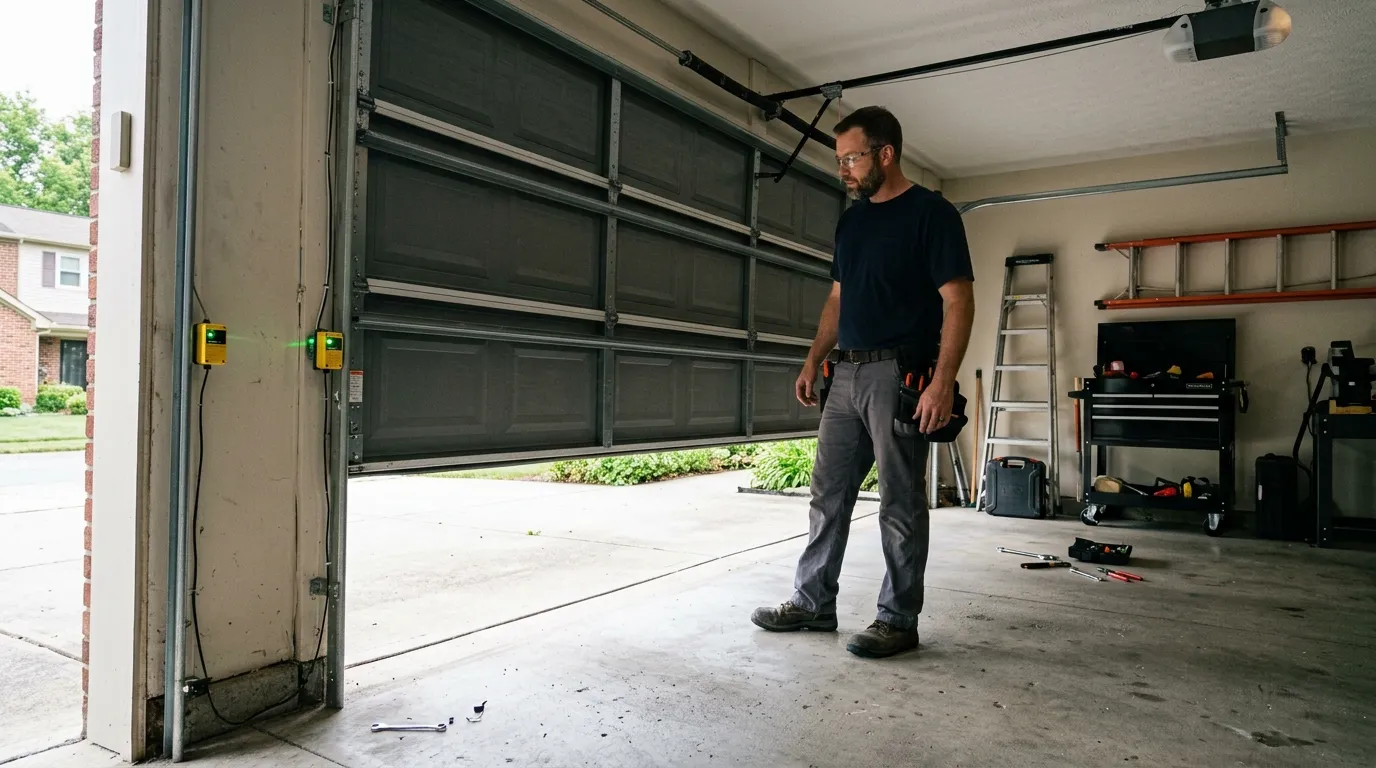
Garage Door Repair
Springs, cables, tracks, rollers, and openers fixed by a tech who explains the problem before touching anything.
Learn more →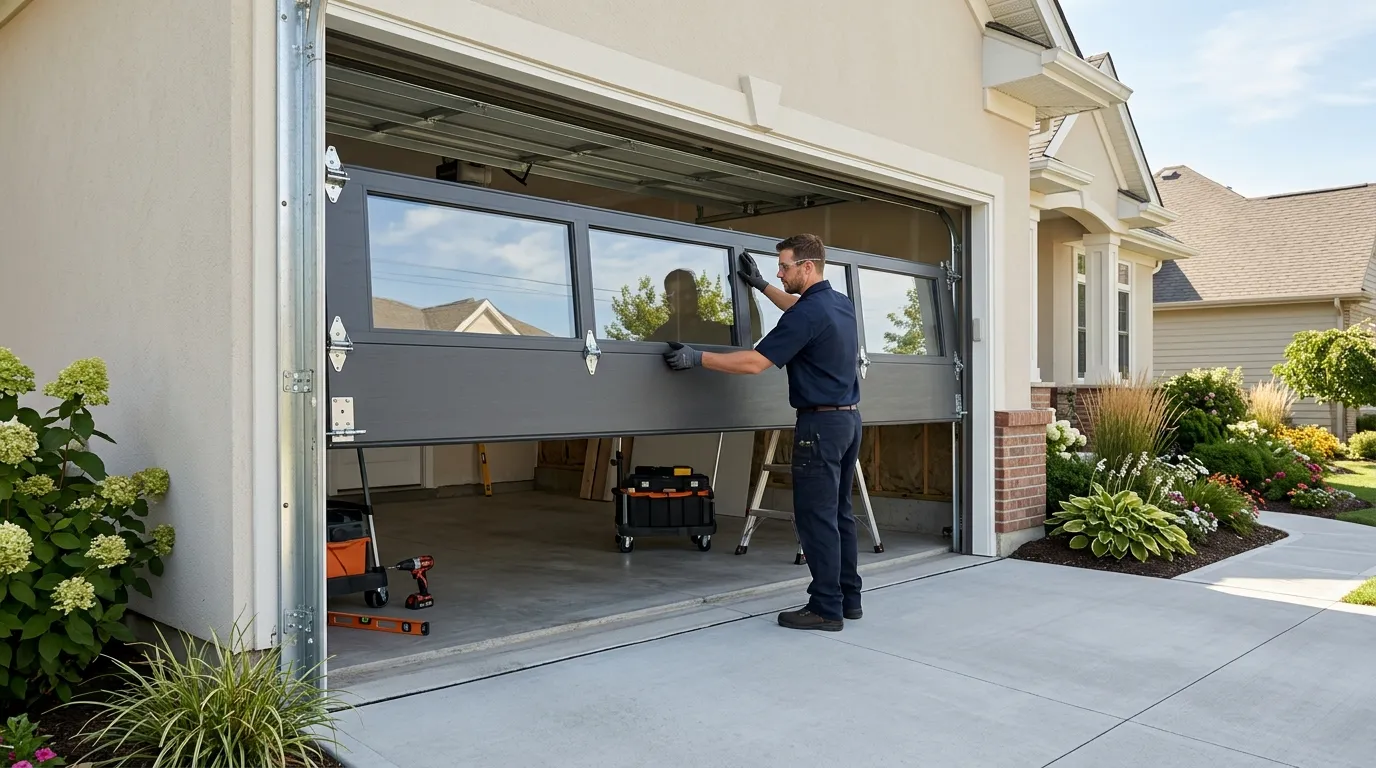
Garage Door Installation
New sectional doors sized and installed for the housing stock actually built in this area.
Learn more →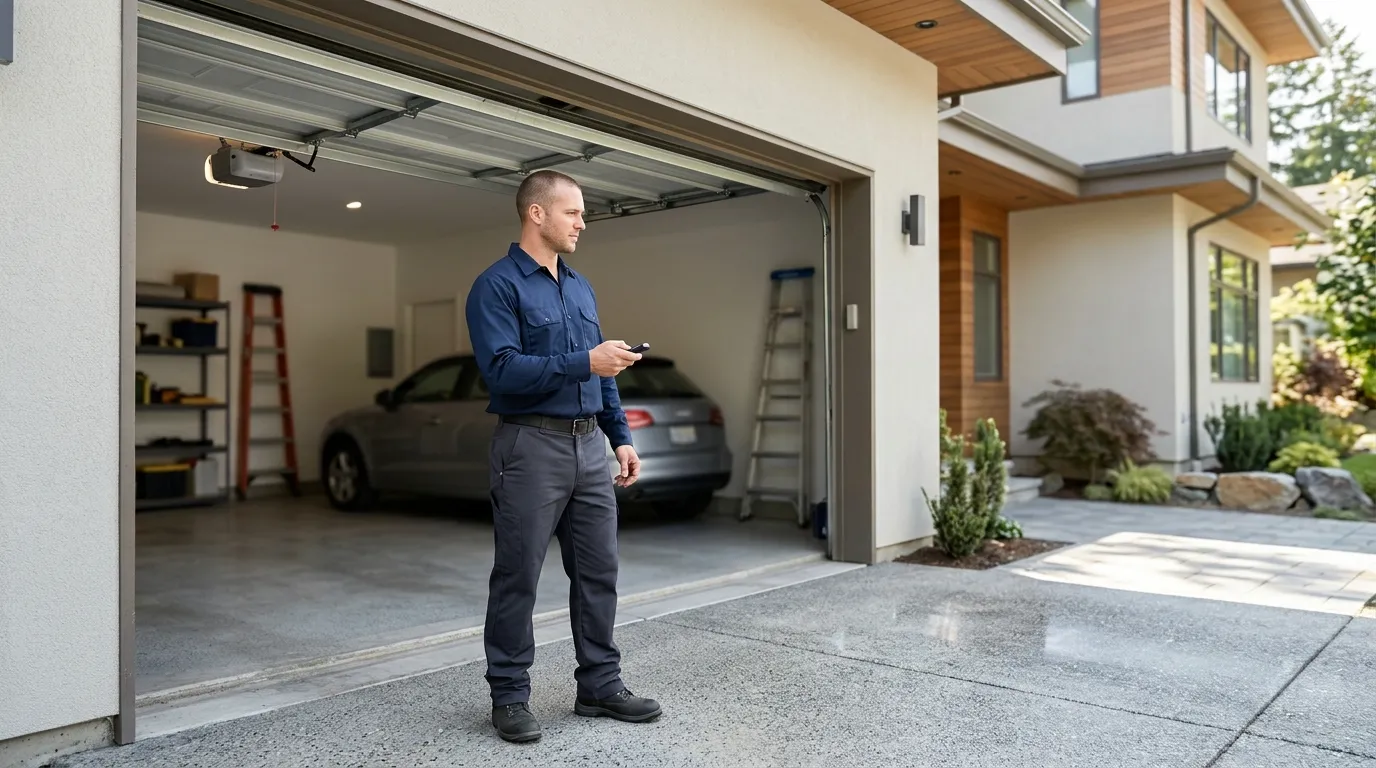
Garage Door Service
Tune-ups, lubrication, and safety checks that catch a small problem before it becomes a service call.
Learn more →Frequently Asked Questions
Can I just push the roller back into the track myself?
If it's barely out and the track isn't bent, sometimes yes, with the door disconnected from the opener and the spring tension respected. But if the door won't sit flush afterward, or one side hangs lower, the bracket or track is compromised and pushing the roller back in just resets the same failure to happen again.
Why did this happen if nothing ever hit the door?
Most of the housing here dates to a 2000s construction wave, so a lot of tracks and roller hardware are simply reaching twenty-plus years of daily heat cycling. Bolts back out of studs, roller bearings wear flat, and the track eventually can't hold a straight line even without a single impact.
Is it cheaper to fix the track or replace it?
A single bent section can sometimes be swapped without replacing the whole track, but a track that's bent in more than one spot usually isn't worth chasing. We'll tell you straight which one you're looking at before doing any work, since a repair on badly bent steel doesn't hold.
Does the heat here actually damage garage door hardware?
This area sits in a moderate heat band, not an extreme one, so it's not sudden warping. It's the slow effect of daily expansion and contraction over many years loosening brackets and wearing bearings, which is why doors from the same building era tend to fail around the same age.
Have a Door That Needs a Second Opinion?
Call and describe what it is doing - we will tell you what it likely is.