
Flower Mound Garage Door Guide
What That Noise From Your Garage Door Is Actually Telling You
Flower Mound's 2000s-era housing stock and moderate heat band produce specific door noises. Here's what grinding, banging, and squealing actually mean on this stock.
- Licensed & Insured
- Same-Area Service Calls
- Upfront Pricing
When It Stops Being a DIY Job
A squeak you can grease yourself. A bang on the way up is not that kind of noise.
Most houses in Flower Mound went up between 1959 and 2014, with the median right around 2000, which puts a huge share of doors in town on original torsion hardware that's now pushing two decades of cycles. That's the point where a spring doesn't announce itself with a squeak - it announces itself with a loud pop and a door that won't budge, because the spring let go mid-cycle.
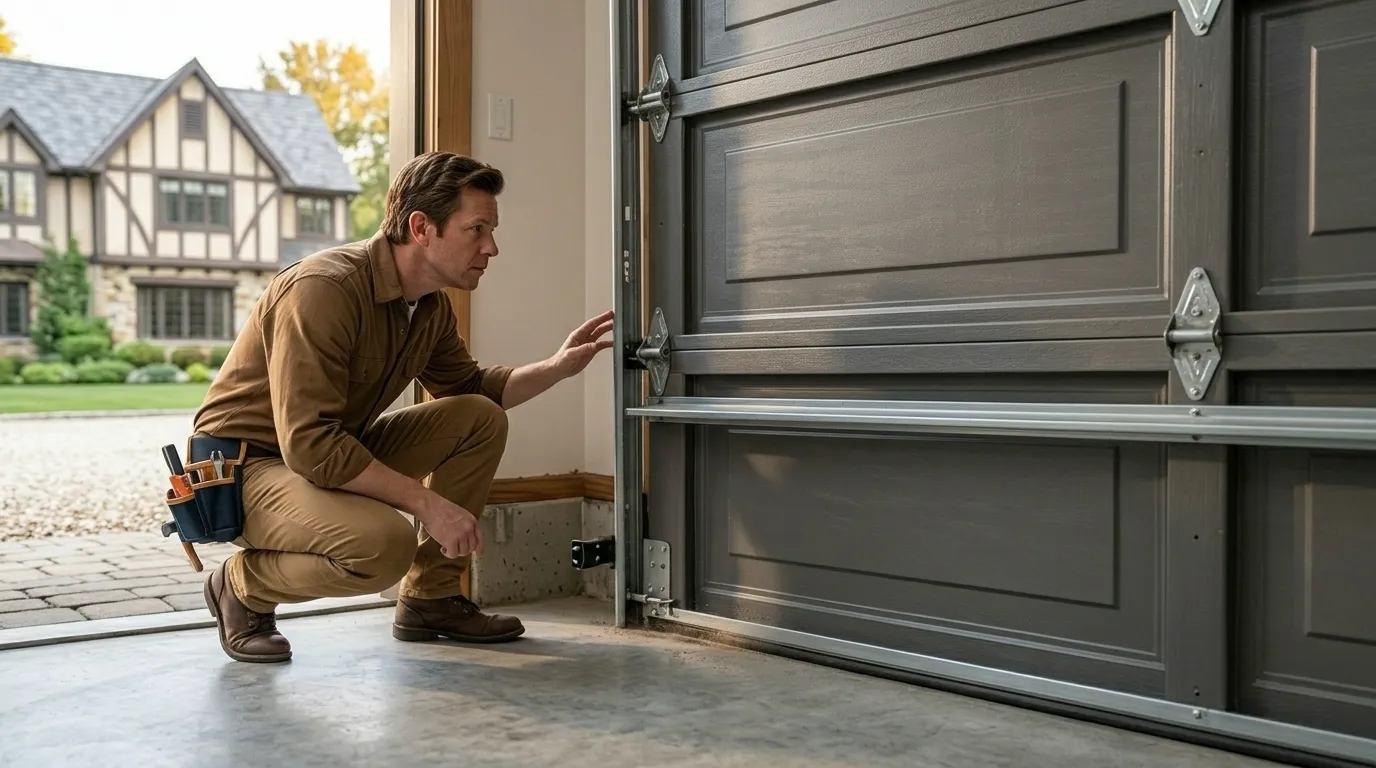
If the door slams down the last six inches, or the opener strains and reverses instead of closing, stop opening it by remote and check by hand. A torsion spring under tension is not a part to grease your way past. If you hear a grinding sound low on the track paired with a wobble in the door itself, that's usually a roller that's worn through its bearing, and it's a small job now.
Left alone on a door that's already flexing on original hardware, it turns into a bent track and a much bigger bill. The line between DIY and calling someone is simple: anything involving the spring or the cable, you call.
What Is Going On
A rhythmic thump every few feet as the door travels usually means a flat spot on a roller, or a hinge that's loosened enough to let one panel ride slightly out of line with the next. On the 2000s-built stock that makes up most of Flower Mound's 27 named areas, that's the single most common complaint we hear, because that generation of door came with steel rollers on plastic bearings that were never meant to last the life of the house.
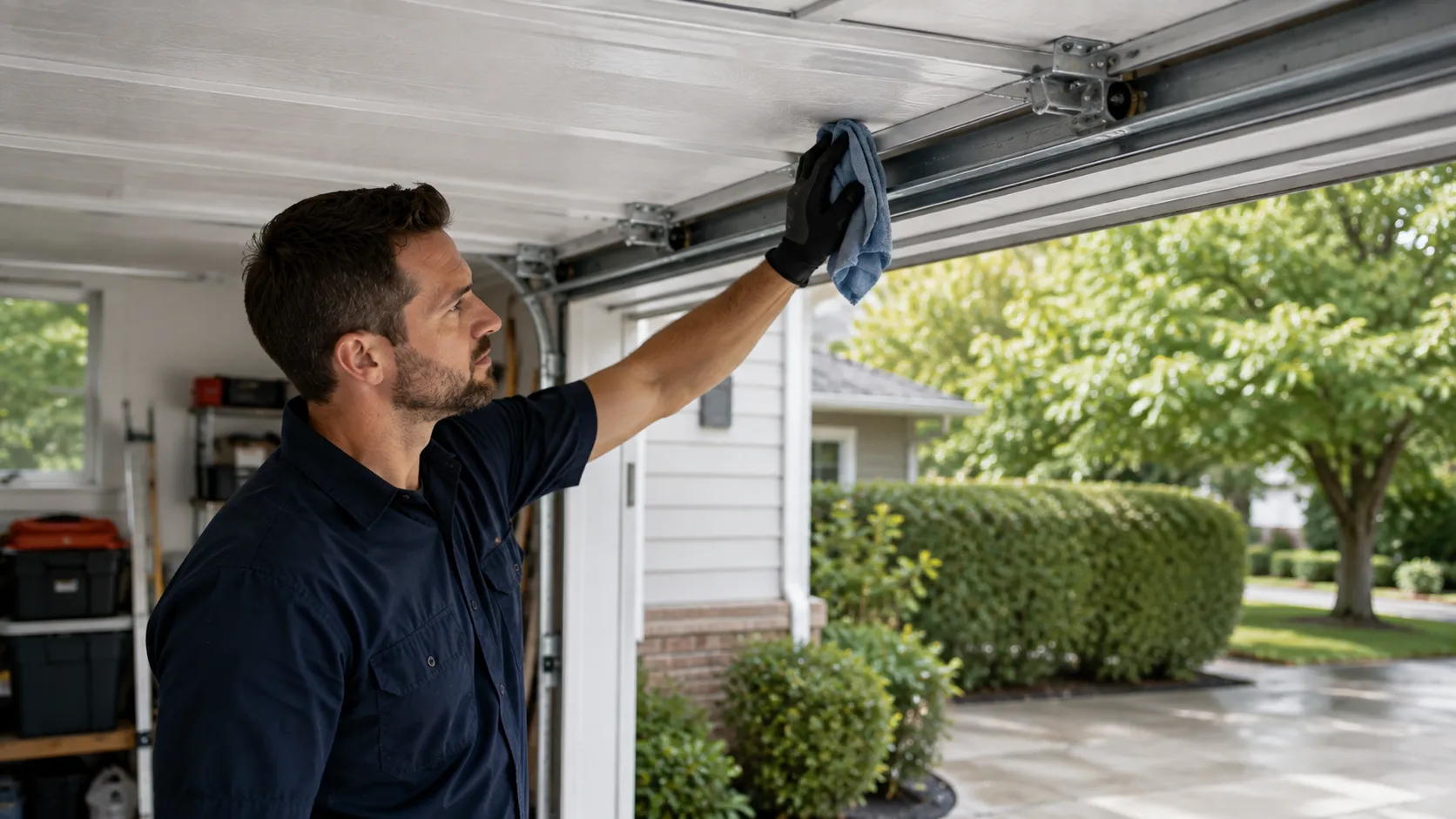
A high-pitched squeal on the way up, especially right at the top of the travel, is almost always the opener's drive gear or chain needing lubrication - cheap to fix, ignorable for a while, but it'll get louder, not quieter. A metallic scrape that happens only when it's cold points to a track that's slightly out of plumb, which shows up more on doors installed during the early part of that 1959-2014 build window, before torsion adjustment became more standardized.
None of these noises fix themselves. They get louder, then they get expensive.
What Local Conditions Do
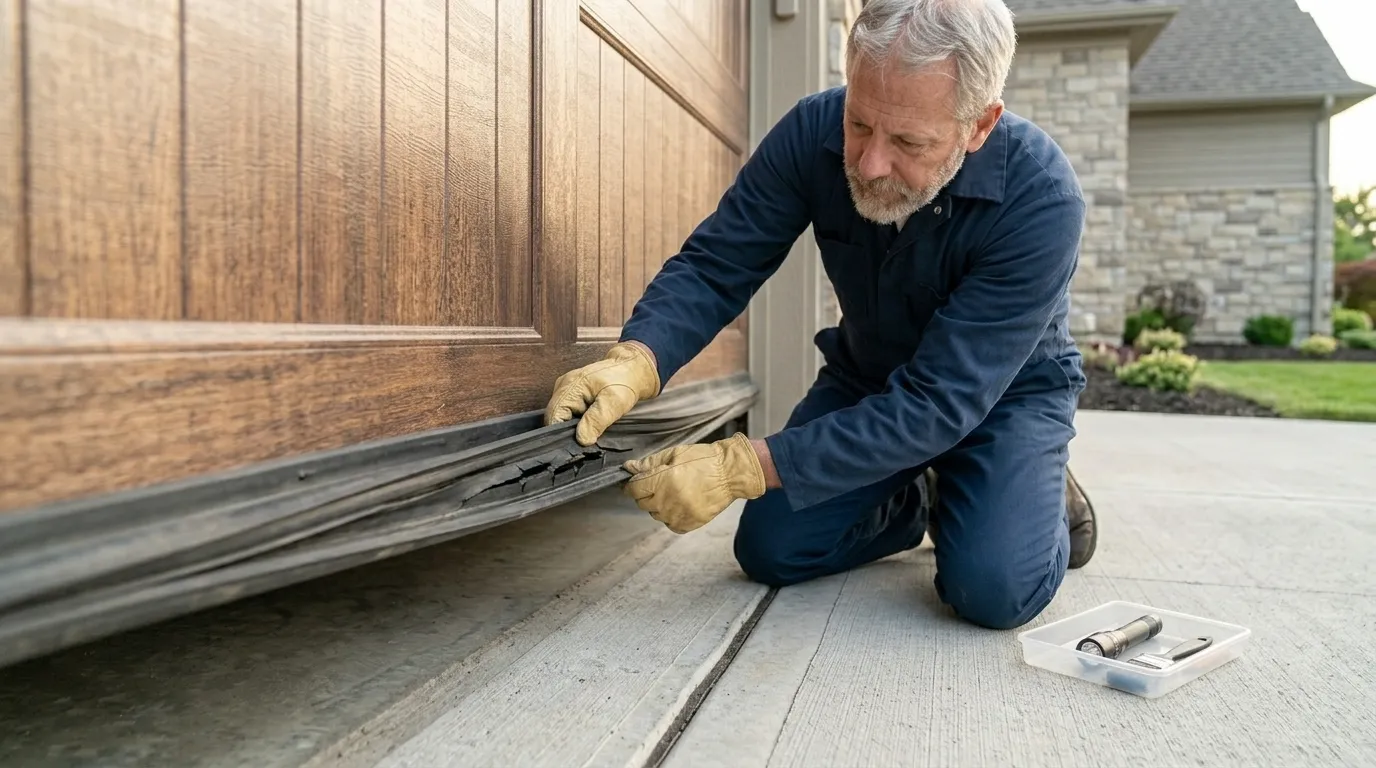
Flower Mound sits in a moderate-heat climate band, not the extreme swings you'd get further west or further north. That matters for what breaks and how fast. Steel expands and contracts with temperature, and in a moderate band that movement is gradual - tracks don't warp overnight, and springs don't lose tension in a single heat spike the way they might somewhere with sharper daily swings.
What that means in practice: noises here tend to build slowly, over months of small misalignment, rather than showing up suddenly after one brutal week. A rattle that's been there for a while and is just now getting louder is doing exactly what you'd expect on this stock in this climate - wear accumulating on a track or roller that was already marginal.
It's not a sign something catastrophic just happened; it's a sign something ordinary has been happening for a while and you're finally hearing it. That's actually good news, because it usually means there's still time to fix the part instead of replacing the whole assembly.
Where People Go Wrong
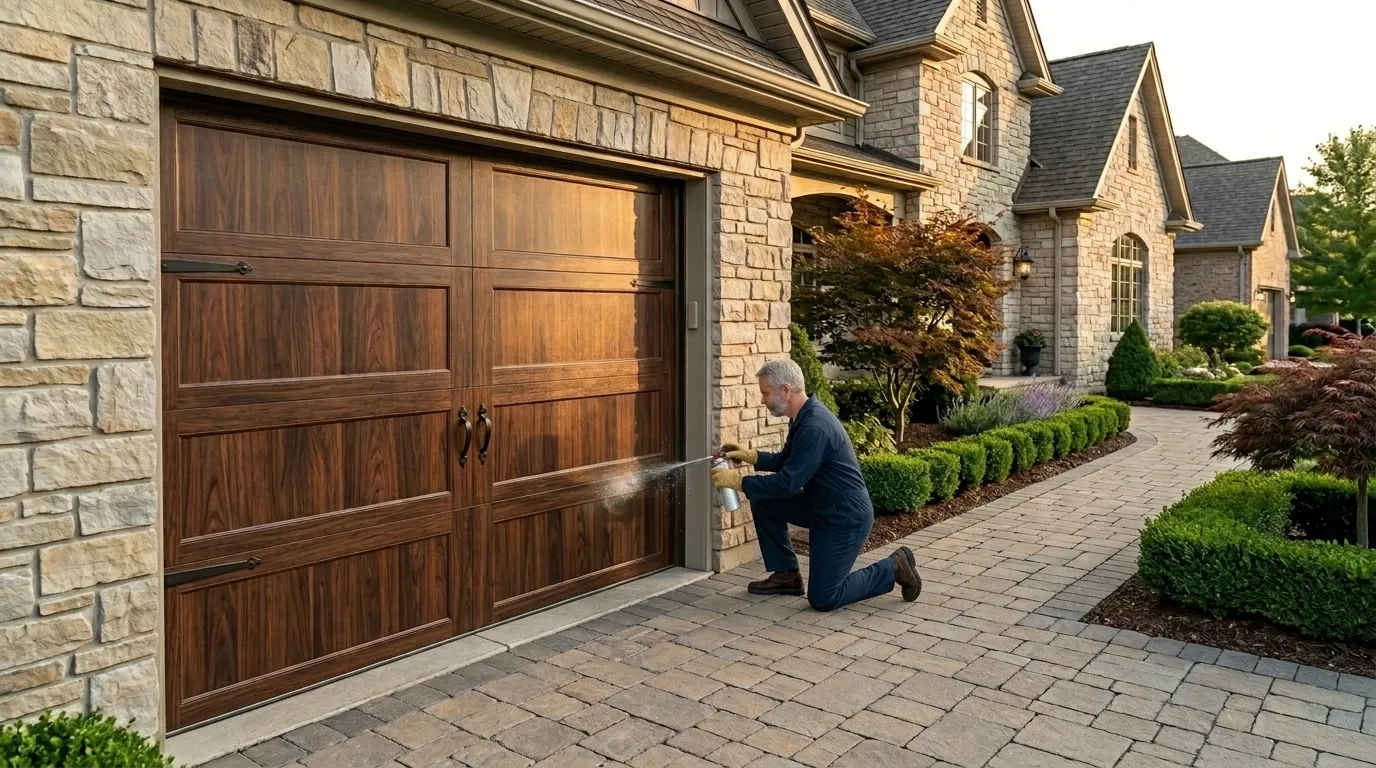
The most common mistake we see: someone hears a noise, sprays WD-40 on everything shiny, and the sound goes quiet for two weeks. That silences a bearing noise temporarily but does nothing for a spring that's losing tension or a track that's out of alignment - and it can make a roller problem worse by attracting dust into a bearing that was already failing.
The other mistake is waiting. With median household income in the Flower Mound service area near $118,949, most owners we talk to have the means to fix a problem the first time it shows up, and most end up wishing they had, because a fourth patch job on an aging spring-and-cable system usually costs more in total than one clean replacement would have. If you're out toward Double Oak or Bartonville, closer to the edge of that 2000s-era build wave, the same logic applies - the hardware age is the same, even if the house is a few years newer or older than the median.
We don't do cosmetic panel touch-ups on doors that are structurally sound elsewhere - if the noise is coming from one dented panel and everything else tracks true, that's a job for a body shop, not us.
How We Can Help
Garage Door Repair
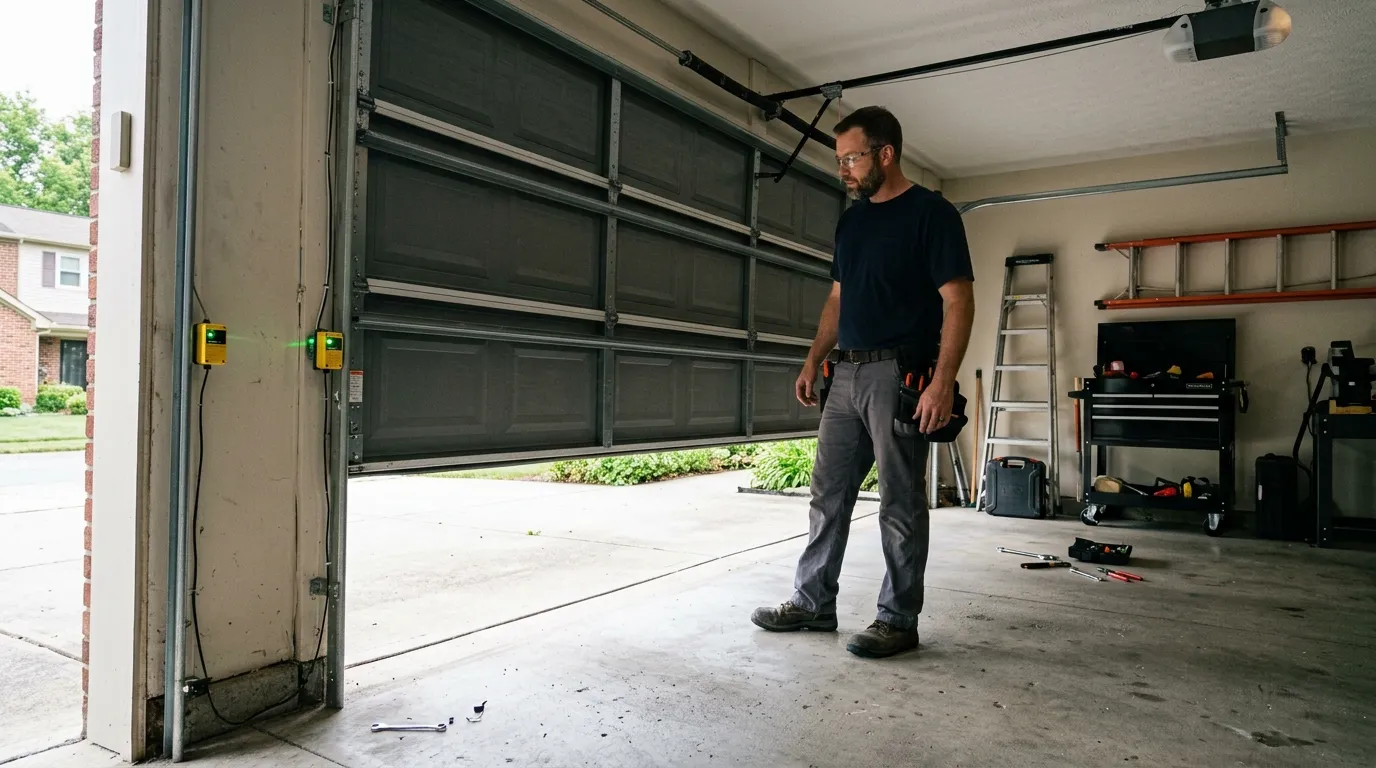
Springs, cables, tracks, rollers, and openers fixed by a tech who explains the problem before touching anything.
Learn more →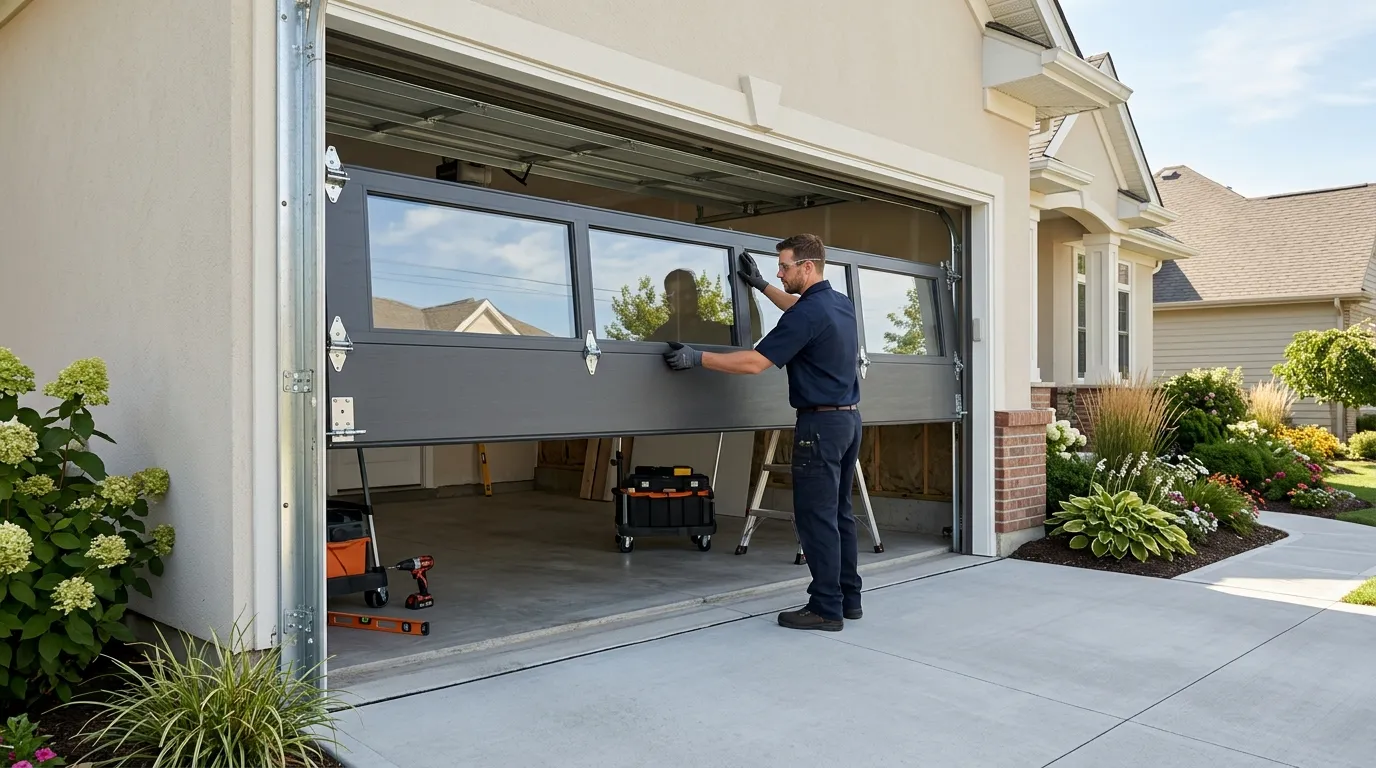
Garage Door Installation
New sectional doors sized and installed for the housing stock actually built in this area.
Learn more →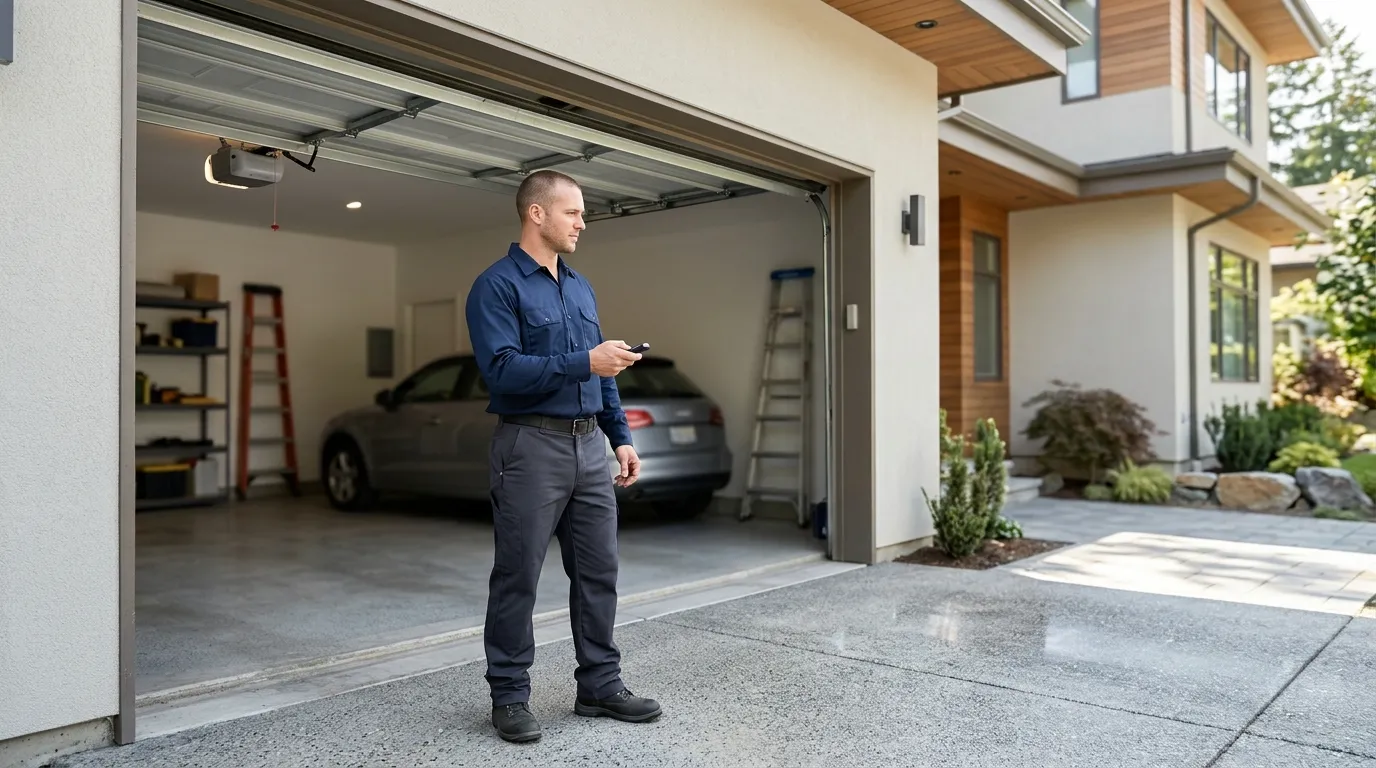
Garage Door Service
Tune-ups, lubrication, and safety checks that catch a small problem before it becomes a service call.
Learn more →Frequently Asked Questions
My garage door makes a loud bang once in a while but still opens fine. Is that urgent?
Yes. A single loud bang, especially followed by the door feeling heavier to lift by hand, usually means a torsion spring has partially or fully let go. The door may still open because the opener is doing all the work the spring used to help with. That's hard on the opener and dangerous if the spring finishes failing while someone's under the door. Get it looked at before the next cycle.
Why does my door only squeal in certain weather?
In Flower Mound's moderate-heat band, temperature swings are gradual rather than extreme, so a noise that only shows up occasionally is more likely tied to humidity or a slight seasonal shift in how metal parts sit than to a sudden failure. It's still worth a look, but it's not usually an emergency the way a sudden new noise is.
Is a grinding noise always the rollers?
Not always, but it's the most common cause on the 2000s-built stock that makes up most of this area. Grinding low on the track, paired with visible wobble in the door panel, points to a worn roller bearing. Grinding that happens near the top of the travel is more often the opener's gear. Either way, it's worth diagnosing before it spreads to the track itself.
Can I just keep tightening the hardware myself when I hear rattling?
You can tighten visible bolts and hinges safely - that's normal maintenance. What you shouldn't touch is anything on the spring or cable system, since those are under load and can cause real injury if they let go while you're working on them. If tightening the hardware doesn't quiet the rattle, that's the signal to stop and call.
Have a Door That Needs a Second Opinion?
Call and describe what it is doing - we will tell you what it likely is.